The Power of Infrastructure as Code
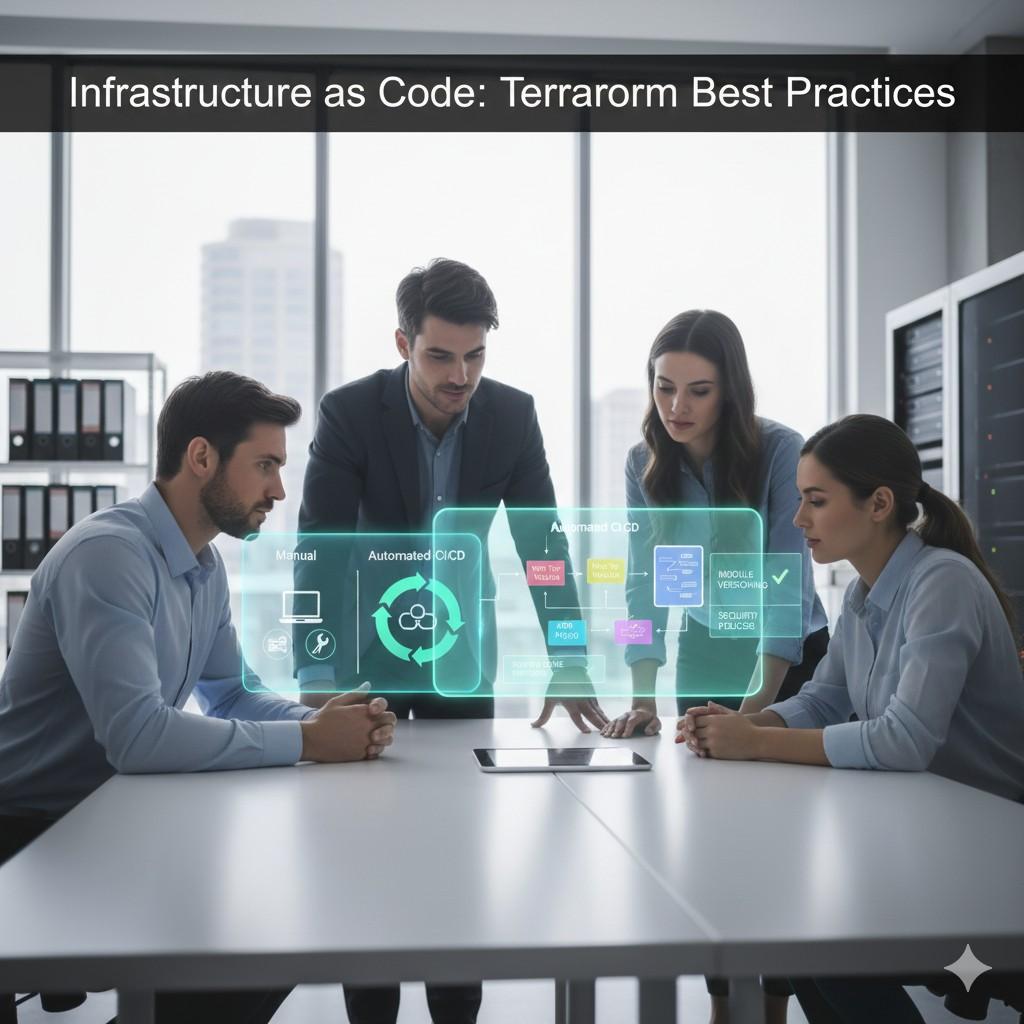
Infrastructure as Code (IaC) transforms infrastructure management from manual, error-prone processes to automated, version-controlled workflows. Terraform, HashiCorp's open-source IaC tool, has become the industry standard for managing cloud infrastructure across multiple providers.
This guide covers battle-tested practices for writing maintainable, scalable Terraform code that teams can collaborate on effectively.
Fundamental Principles
Declarative, Not Imperative
With IaC, your infrastructure is documented, version-controlled, and reproducible. Manual changes become anomalies, not the norm.
State Management
Terraform tracks infrastructure state. Proper state management is critical:
- Remote state - Store state in S3, Azure Blob, or Terraform Cloud
- State locking - Prevent concurrent modifications using DynamoDB or similar
- Encryption - Encrypt state files (they contain sensitive data)
- State isolation - Separate state files for different environments
Project Structure
Module Design
Create reusable modules for common patterns:
- One module per logical component (VPC, database cluster, application)
- Clear input variables with descriptions and validation
- Useful outputs for consumption by other modules
- Sensible defaults where appropriate
Writing Quality Terraform Code
Use Variables Effectively
Resource Naming Conventions
- Use descriptive, consistent names
- Include environment in resource names
- Follow cloud provider naming restrictions
- Use underscores for Terraform identifiers
- Use hyphens for cloud resource names
State Management Best Practices
Workspace Strategy
Use workspaces judiciously:
- Single environment - Workspaces for temporary testing
- Multiple environments - Separate state files preferred over workspaces
- Shared modules - Same code, different state per environment
Security and Secrets Management
Never Commit Secrets
Keep secrets out of your code:
- Use AWS Secrets Manager, Azure Key Vault, or HashiCorp Vault
- Reference secrets via data sources
- Use environment variables for Terraform Cloud tokens
- Scan code with tools like tfsec and Checkov
Principle of Least Privilege
Grant minimal necessary permissions:
- Separate IAM roles for Terraform execution
- Use role assumption for cross-account access
- Implement SCPs and permission boundaries
- Regular audit of Terraform permissions
Dependency Management
Explicit Dependencies
Terraform infers most dependencies automatically, but sometimes you need explicit ones:
Count and For_Each
Create multiple similar resources elegantly:
Testing and Validation
Pre-commit Checks
Catch issues before they reach version control:
terraform fmt- Format code consistentlyterraform validate- Check syntax and configurationtflint- Detect errors and enforce best practicestfsec- Security scanning
Automated Testing
Test infrastructure code like application code:
- Terratest - Go-based testing framework
- Kitchen-Terraform - Integration testing
- Terraform Compliance - Policy as code testing
CI/CD Integration
Automated Workflows
Integrate Terraform into your CI/CD pipeline:
- PR Creation - Run plan, post results as comment
- PR Approval - Require security scans to pass
- Merge to Main - Apply changes to development
- Tag/Release - Apply to staging/production
Performance Optimization
Reduce Plan Time
Large infrastructures can have slow plan times:
- Target specific resources:
terraform plan -target=module.networking - Use
-refresh=falsewhen state is known to be current - Break large configurations into smaller, focused modules
- Use
-parallelismflag to control concurrent operations
State File Optimization
Keep state files manageable:
- Split large monolithic state into smaller state files
- One state file per logical environment or application
- Use
terraform state mvto reorganize - Periodically clean up unused resources
Common Pitfalls and Solutions
Pitfall: Manual Changes
Problem: Someone modifies infrastructure manually, causing state drift.
Solution: Regular terraform plan runs, drift detection alerts, and culture of "everything through code."
Pitfall: Circular Dependencies
Problem: Resources depend on each other circularly.
Solution: Redesign architecture to eliminate cycles, use data sources to break cycles.
Pitfall: Provider Version Lock
Problem: Provider updates break existing code.
Solution: Lock provider versions explicitly:
Advanced Patterns
Module Composition
Build complex infrastructure from simple modules:
Dynamic Blocks
Generate repeated nested blocks programmatically:
Documentation and Collaboration
Code Documentation
- Describe module purpose in README.md
- Document all variables with descriptions
- Explain non-obvious design decisions in comments
- Use
terraform-docsto generate documentation
Change Management
Establish clear processes:
- All changes through pull requests
- Required approvals for production changes
- Plan output reviewed before apply
- Scheduled maintenance windows for significant changes
Monitoring and Observability
Monitor your IaC operations:
- Track Terraform run success/failure rates
- Alert on unexpected state changes
- Monitor drift detection results
- Track time-to-apply metrics
- Audit who made what changes when
Conclusion
Terraform enables teams to manage infrastructure at scale with confidence. By following these best practices—modular design, proper state management, comprehensive testing, and automated workflows—you can build reliable, maintainable infrastructure as code.
Key takeaways:
- Treat infrastructure code with the same rigor as application code
- Use modules to promote reusability and maintainability
- Implement comprehensive testing and validation
- Automate everything through CI/CD
- Never commit secrets or manual changes
Ready to level up your Infrastructure as Code practice? Our DevOps engineers can help you design and implement Terraform workflows that scale with your organization.
Related Topics
Mason Davies
Infrastructure Engineer
Expert in cloud infrastructure and container orchestration with over 10 years of experience helping enterprises modernize their technology stack and implement scalable solutions.