The API Architecture Decision
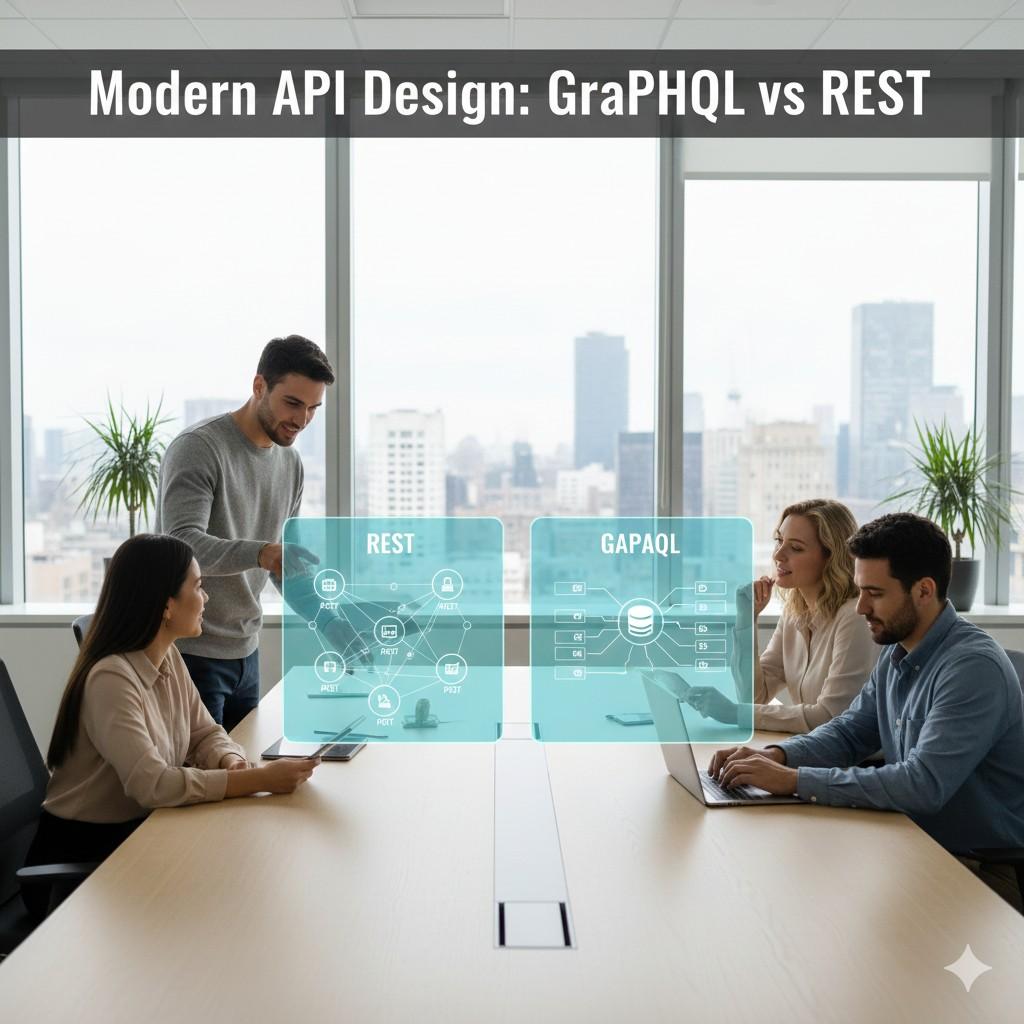
APIs are the backbone of modern applications, enabling communication between services, mobile apps, and third-party integrations. Two architectural styles dominate today: REST, the established standard, and GraphQL, the increasingly popular alternative.
This guide provides an honest comparison to help you choose the right approach for your use case, understanding that both have strengths and trade-offs.
REST: The Established Standard
REST Fundamentals
REST (Representational State Transfer) organizes APIs around resources, using standard HTTP methods:
- GET - Retrieve resources
- POST - Create new resources
- PUT/PATCH - Update existing resources
- DELETE - Remove resources
REST Strengths
REST remains popular for good reasons:
- Simplicity - Easy to understand and implement
- Caching - HTTP caching works naturally with GET requests
- Tooling - Extensive ecosystem of tools and libraries
- Browser-friendly - Works directly in browsers without special clients
- Stateless - Each request contains all necessary information
REST Challenges
REST APIs face several common issues:
- Over-fetching - Receiving more data than needed
- Under-fetching - Requiring multiple requests to get sufficient data
- Version management - API versioning can be complex
- Documentation drift - Keeping docs synchronized with implementation
REST works best when your API naturally maps to resources and when HTTP caching provides significant benefits.
GraphQL: The Flexible Alternative
GraphQL Fundamentals
GraphQL provides a query language for your API, allowing clients to request exactly the data they need:
GraphQL Strengths
GraphQL addresses many REST limitations:
- Precise data fetching - Get exactly what you need, nothing more
- Single request - Fetch related data in one round trip
- Strong typing - Schema defines all possible operations
- Introspection - API is self-documenting
- Rapid iteration - Frontend teams can add fields without backend changes
GraphQL Challenges
GraphQL introduces new complexities:
- HTTP caching - Harder to leverage standard HTTP caching
- Learning curve - More concepts to understand
- Query complexity - Clients can create expensive queries
- File uploads - Not natively supported, requires extensions
- Error handling - Different from HTTP status codes
Head-to-Head Comparison
Performance
REST: Simple queries are fast. Multiple round trips for related data can slow things down. HTTP caching can dramatically improve performance.
GraphQL: Fetches all data in one request. Risk of N+1 query problems if not carefully implemented. Requires DataLoader or similar batching solutions.
Winner: Depends on use case. GraphQL reduces network round trips. REST leverages HTTP caching better.
Developer Experience
REST: Familiar to most developers. Simple for basic CRUD operations. Documentation requires manual maintenance.
GraphQL: Steeper learning curve. Excellent tooling (GraphiQL, Playground). Self-documenting through introspection.
Winner: GraphQL for complex data needs. REST for simple APIs.
Mobile Applications
REST: Multiple requests waste mobile bandwidth. Over-fetching is expensive on cellular connections.
GraphQL: Single request reduces latency. Precise data fetching saves bandwidth. Ideal for variable network conditions.
Winner: GraphQL is often superior for mobile clients.
Caching Strategy
REST: HTTP caching (ETags, Cache-Control) works out of the box. CDNs cache GET requests naturally.
GraphQL: Typically uses POST requests, bypassing HTTP caching. Requires client-side caching (Apollo, Relay). More complex but more powerful.
Winner: REST for simple caching requirements.
Real-time Data
REST: Requires polling or WebSocket implementation alongside REST API.
GraphQL: Native subscription support for real-time updates built into the spec.
Winner: GraphQL has better real-time support.
When to Choose REST
REST is the right choice when:
- Simple CRUD operations - Your API maps naturally to resources
- Public APIs - Third-party developers expect REST
- HTTP caching is critical - You need CDN caching and browser caching
- File operations - Uploading/downloading files frequently
- Small team - Familiarity reduces time to productivity
- Microservices communication - Simple service-to-service calls
When to Choose GraphQL
GraphQL excels when:
- Complex data requirements - Deeply nested relationships
- Mobile applications - Bandwidth and latency are concerns
- Rapid iteration - Frontend teams need flexibility
- Multiple clients - Different clients need different data
- Real-time features - Built-in subscription support needed
- Developer experience - Strong typing and tooling valued
Hybrid Approaches
GraphQL + REST
You don't have to choose just one. Many organizations use both:
- GraphQL for main application API
- REST for webhook callbacks
- REST for file uploads/downloads
- GraphQL wrapping existing REST services
REST with GraphQL-like Features
Implementation Best Practices
REST Best Practices
- Use consistent resource naming (plural nouns)
- Version your API (via URL or headers)
- Implement proper HTTP status codes
- Use HATEOAS for discoverability
- Implement rate limiting and pagination
- Provide comprehensive API documentation
GraphQL Best Practices
- Implement query depth limiting
- Use DataLoader to prevent N+1 queries
- Set query complexity limits
- Implement proper error handling
- Use persisted queries in production
- Monitor query performance
- Version schema using field deprecation
Security Considerations
REST Security
- Standard OAuth 2.0 / JWT authentication
- CORS configuration for browser clients
- Rate limiting per endpoint
- Input validation on all endpoints
GraphQL Security
- Query depth and complexity limits are critical
- Disable introspection in production (debatable)
- Implement field-level authorization
- Watch for denial-of-service via expensive queries
- Use allow lists for known queries
GraphQL's flexibility is powerful but requires careful security considerations to prevent abuse.
Tooling and Ecosystem
REST Tooling
- Documentation: Swagger/OpenAPI, Postman
- Testing: Postman, Insomnia, REST Client
- Mocking: JSON Server, Prism
- Frameworks: Express, FastAPI, Spring Boot
GraphQL Tooling
- Documentation: GraphiQL, GraphQL Playground
- Client libraries: Apollo Client, Relay, urql
- Server frameworks: Apollo Server, GraphQL Yoga
- Code generation: GraphQL Code Generator
- Monitoring: Apollo Studio, GraphQL Inspector
Migration Strategies
REST to GraphQL
Migrate gradually:
- Start with GraphQL wrapper around REST APIs
- Migrate one domain at a time
- Run both APIs in parallel during transition
- Update clients incrementally
- Deprecate REST endpoints when safe
GraphQL to REST
Less common but sometimes necessary:
- Identify most common GraphQL queries
- Create corresponding REST endpoints
- Implement caching strategy
- Update documentation
- Migrate clients gradually
Real-World Examples
Companies Using REST
- Stripe - Payment API simplicity is crucial
- Twilio - Webhooks and HTTP semantics are central
- AWS - Service APIs map naturally to resources
Companies Using GraphQL
- GitHub - Complex data relationships, diverse clients
- Shopify - Flexible storefront data fetching
- Facebook - Created GraphQL for mobile efficiency
Conclusion
There's no universal winner between REST and GraphQL. The right choice depends on your specific requirements:
Choose REST when: You need simplicity, HTTP caching, or building public APIs for broad consumption.
Choose GraphQL when: You have complex data requirements, support multiple clients with varying needs, or prioritize developer experience and rapid iteration.
Many successful organizations use both, leveraging each approach where it excels. Start with your team's strengths, evaluate your specific use cases, and remember that you can always evolve your API strategy as needs change.
Need help designing your API strategy? Our architects can assess your requirements and design an approach that balances performance, developer experience, and maintainability.
Related Topics
Charlotte Roberts
API Architect
Expert in cloud infrastructure and container orchestration with over 10 years of experience helping enterprises modernize their technology stack and implement scalable solutions.